Automotive Copywriting
There’s rather more to a car than four wheels and a list of features
A car can be a practical necessity, a significant investment, a business tool, a design statement or something somebody has wanted since they were twelve. Sometimes several of those things at once.
That’s part of what makes automotive copywriting interesting. The same industry produces family hatchbacks, luxury saloons, high-performance sports cars, electric buses, commercial trucks and engineering technologies most drivers will never know exist.
They all need explaining. But not in quite the same way.
I’ve been writing professionally for 30 years, including automotive advertising, brochures, websites, reports and marketing communications for manufacturers, suppliers and organisations across the motor industry.
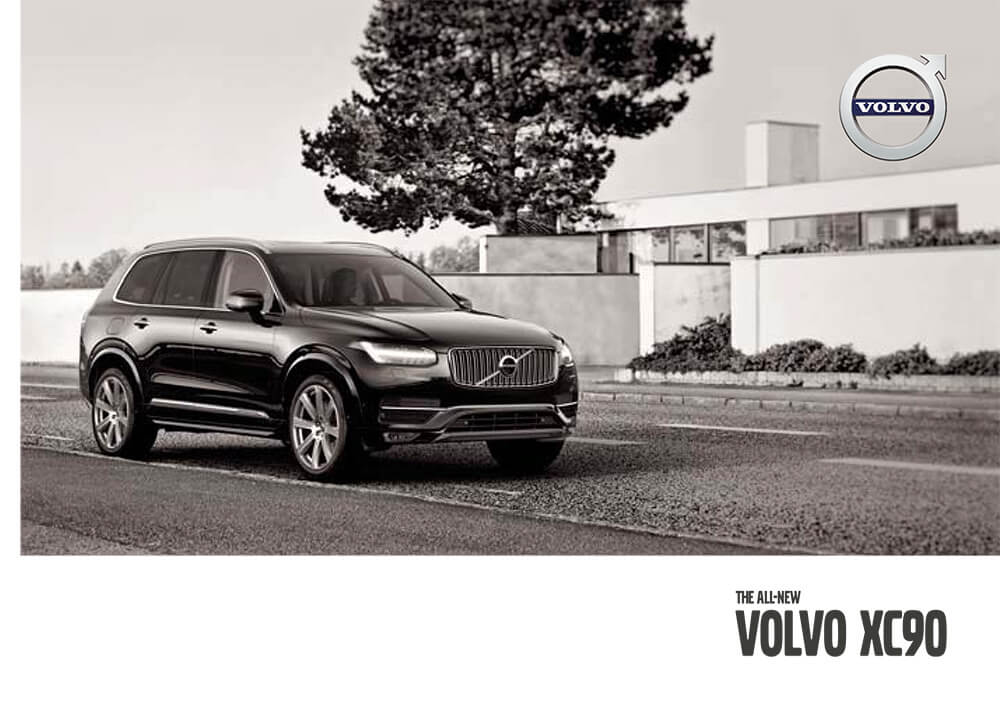
My automotive clients have included Volvo, Toyota, Mercedes-Benz, McLaren, Ford, Nissan, Mitsubishi, Lotus, NIO, SsangYong, MIRA, TRL and the Society of Motor Manufacturers and Traders (SMMT).
Different vehicles. Different audiences. Different reasons to care.
Nobody buys a specification sheet
Power output. Torque. Wheelbase. Payload. Battery capacity. Charging speed. CO₂ emissions.
These things matter. But their importance depends entirely on who’s reading them.
A fleet manager assessing total cost of ownership needs different information from somebody choosing a family SUV. A commercial vehicle operator may be interested in payload and uptime. A performance-car enthusiast probably has other priorities.
Good automotive copywriting connects the specifications with what they actually mean.
A safety feature isn’t simply a collection of sensors and cameras. It needs explaining in terms of what it does, when it operates and why somebody might value it.
An electric vehicle’s range figure needs appropriate context. A commercial vehicle’s payload needs to be accurate. And a driver’s assistance system shouldn’t mysteriously become autonomous driving because it sounds more impressive.
The numbers matter.
Knowing what to do with them matters just as much.
A Volvo shouldn’t sound like a McLaren
Every automotive manufacturer has a personality. Or at least it should.
The language appropriate to a luxury grand tourer won’t necessarily work for a family car, an electric city vehicle or a heavy commercial truck.
Some brands sell engineering excellence. Others emphasise practicality, craftsmanship, performance, reliability, innovation or a particular driving experience. And while several manufacturers may make perfectly legitimate claims about the same qualities, they shouldn’t all sound identical when doing so.
I’ve worked with established global manufacturers and specialist automotive brands, writing across different vehicle categories and communications.
The challenge isn’t to develop a universal automotive vocabulary. It’s to understand what makes each brand distinctive, what its customers value and how those things should influence the writing.
There’s only so much room in the industry for vehicles described as breathtaking, exhilarating and revolutionary. Particularly when somebody’s trying to buy a sensible diesel van.
The customer has usually done some homework
Buying a vehicle is rarely an impulse decision. Potential customers compare models, specifications, prices, reviews, finance options and running costs. They might spend weeks researching before contacting a dealership.
Some know exactly what they’re looking for. Others have discovered that choosing between hybrid, plug-in hybrid and battery-electric vehicles requires rather more thought than choosing a paint colour.
Automotive website content and marketing copy need to acknowledge those differences.
Sometimes the job is to create interest. Sometimes it’s to answer a practical question, explain a technology, address uncertainty or help somebody distinguish between two apparently similar options.
I write with the audience and their stage in the buying process in mind. Attracting someone’s interest is one thing. Giving them the confidence to take the next step is another.
New technology needs better explanations, not bigger adjectives
The motor industry has never been particularly short of technical innovation. Electrification, connected vehicles, battery technology, intelligent safety systems, alternative fuels, automation and increasingly sophisticated software are changing what vehicles can do and how they’re used.
They also create new communication challenges. Technical teams know how the systems work. Marketing teams know what they want customers to understand. The two don’t always speak quite the same language. That’s where an experienced copywriter can help.
I’ll research the subject, examine the source material and ask questions until I understand what the technology does, how it works and which benefits can reasonably be claimed. That last bit is important. Innovation is interesting enough without having to exaggerate it.
Commercial vehicles are a different proposition
Writing about a heavy goods vehicle, an electric bus or a working van involves a different set of priorities from promoting a sports car.
Performance still matters, but performance might mean carrying capacity, reliability, efficiency, operating costs or keeping a vehicle working rather than sitting in a depot.
The audience might include fleet directors, procurement teams, transport operators, engineers, drivers and business owners. Each may need something different from the same product information.
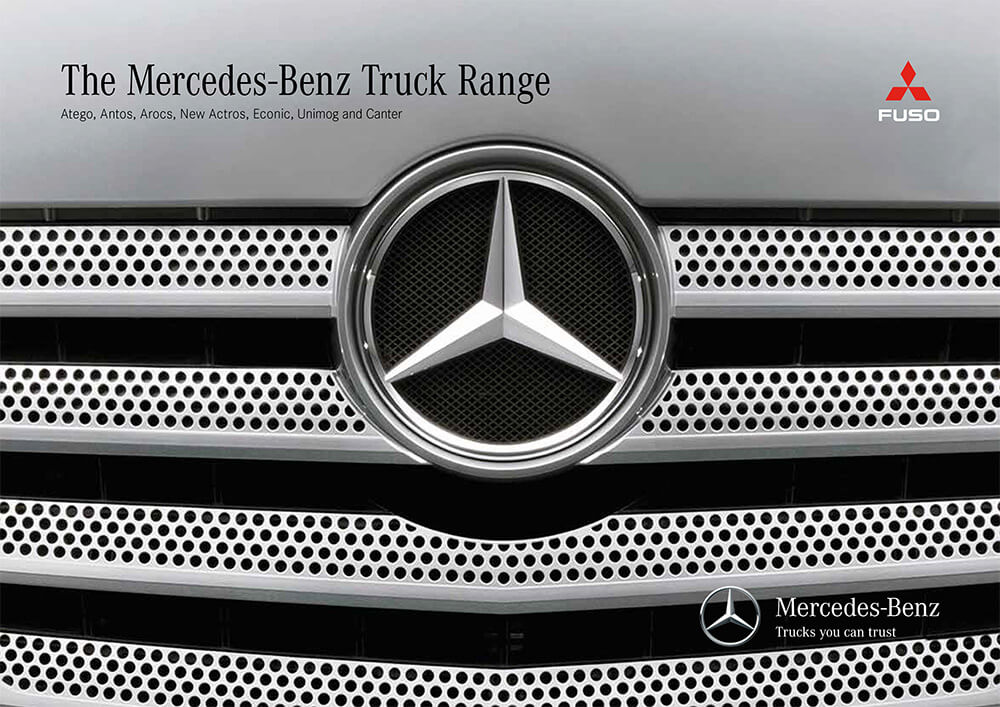
I’ve written for the commercial vehicle sector, including Mercedes-Benz truck brochures and other vehicle communications.
The task is to turn technical and operational detail into information that helps people make informed commercial decisions.
A beautifully engineered truck is impressive. A beautifully engineered truck that makes financial and operational sense is rather more persuasive.
Automotive copywriting services
I provide automotive copywriting for manufacturers, suppliers, dealerships, fleet businesses, aftermarket companies and other organisations working across the motor industry. Projects can include:
- Automotive advertising and campaign copy
- Vehicle launch communications
- Car and commercial vehicle brochures
- Automotive website and landing page copy
- Vehicle, parts and accessories descriptions
- Automotive blogs and articles
- Technical, product and fleet communications
- Brand messaging and tone of voice
- Case studies and customer stories
- Annual reports and corporate communications
- Sustainability and ESG content
- Automotive industry reports and white papers
I can work directly with your business or alongside your advertising agency, marketing department, design team or technical specialists.
Accuracy isn’t something to sort out afterwards
Vehicle specifications can change between models, markets, trim levels and model years. Optional equipment may be standard on one version and unavailable on another. A quoted range or performance figure may depend on specific test conditions. Safety and environmental claims may need careful qualification.
Small details can make a substantial difference.
I work from approved source material where available, check technical information and raise questions about anything unclear. I won’t invent a feature, inflate a capability or quietly remove an inconvenient qualification to make the sentence read better.
The engineers and product specialists remain the authorities on the vehicle. My job is to make their information understandable, accurate and worth reading.
From a brochure to a complete campaign
Some automotive projects need a handful of words. Others need thousands.
A vehicle launch might involve advertising concepts, brochures, website pages, model descriptions, customer communications and supporting technical material.
The important thing is that they feel like parts of the same campaign rather than unrelated pieces of writing.
I’ve worked on projects ranging from individual advertisements and vehicle brochures to substantial corporate and product communications.
I can develop copy from an initial brief, work within established brand guidelines or join a project where the creative direction and design are already in place.
And because I’ve spent much of my career working with agencies, I’m quite comfortable with the peculiar mixture of deadlines, revisions, approvals and last-minute changes that tends to accompany a major launch.
Thirty years. Quite a few marques.
My career began in journalism before moving into government speechwriting and then freelance commercial copywriting. That background has proved useful in the automotive industry. Journalism taught me to find the interesting part of a story. Speechwriting taught me to understand somebody else’s voice.
Copywriting taught me to consider the audience, the objective and what needs to happen next.
Add three decades of writing for businesses and organisations, including some of the world’s best-known automotive manufacturers, and you have a fairly useful combination.
I understand the difference between an advertising idea, a technical explanation, a brand message and a customer reassurance.
Sometimes a project needs all four.
Got an automotive project that needs words?
Perhaps you’re launching a vehicle, rewriting a website, producing a brochure or explaining a technology that makes perfect sense to your engineers but rather less sense to everybody else.
Perhaps you’ve already got the design, the specifications and the photographs.
Just not the words.
Tell me what you’re working on, and I’ll tell you whether I can help.
WHAT I WRITE ABOUT
There are no dull subjects. Only dull writers.
Lost for words?
info@tomrigby.com
+44 (0) 7715 171286