
Transport & Logistics Copywriting

Getting it there is your job. Explaining why you’re the right people is mine.
Most people don’t give much thought to logistics until something fails to arrive. Businesses rarely have that luxury.
A delayed shipment can interrupt production. A missed delivery can disappoint a customer. A problem with customs, storage or distribution can have consequences considerably beyond the whereabouts of one unfortunate pallet.
That makes choosing the right transport or logistics partner rather important. And explaining why somebody should choose yours is where good copywriting comes in.
I’ve been writing professionally for 30 years, including work for transport, freight, logistics and commercial vehicle businesses.
My clients have included DHL, DPD, Yusen, Barrington Freight and Kings Heavy Haulage, alongside Mercedes-Benz commercial vehicle projects.
I help transport and logistics companies explain what they do, demonstrate what makes them different and give prospective customers enough confidence to make an enquiry.
Nobody buys a supply chain
What customers want is something rather more specific.
A manufacturer wants components delivered when they’re needed. A retailer wants stock available. A food producer needs temperature-sensitive goods handled correctly. A business importing products needs somebody who understands the paperwork as well as the shipping.
The service might involve freight forwarding, contract logistics, warehousing, distribution or several different operations working together. But the customer is usually interested in the outcome.
I’ll look beyond descriptions of your facilities, fleet, systems and processes to establish what those capabilities actually mean.
Where do you operate? What can you handle? What happens when something goes wrong? How do you manage unusual requirements? Why should somebody trust you with their business?
The interesting part isn’t always what you do. It’s what you’re particularly good at doing.
Reliability is a claim. Where’s the evidence?
Almost every logistics company describes itself as reliable, flexible, efficient and customer-focused.
It would be rather worrying if they didn’t.
The problem is that those claims become less persuasive when everybody makes them.
I’d rather find the specifics.
Your delivery performance. Specialist handling capabilities. Network coverage. Investment in technology. Experience with difficult shipments. A customer problem you’ve solved.
A good case study might reveal more about your operation than several pages of corporate reassurance.
And if you have evidence of exceptional performance, it deserves explaining properly rather than disappearing into a paragraph about operational excellence.
A promise is useful. A reason to believe it is better.
Different cargo. Different concerns.
Moving pharmaceuticals under controlled temperatures presents different challenges from transporting abnormal loads or distributing clothing to retail stores.
Air freight, ocean freight, road haulage, rail, contract logistics and last-mile delivery all have their own terminology, commercial considerations and customer expectations.
The audience changes too.
A procurement director may be concerned with costs, risk and contractual performance. An operations manager may want to understand capacity, systems and day-to-day reliability.
A smaller business might simply want to know whether you can collect its goods on Tuesday.
I adapt the detail, language and emphasis accordingly.
Because the same sales message won’t necessarily work for somebody shipping thousands of containers and somebody booking their first international delivery.
Technology needs translating too
Transport and logistics businesses increasingly depend on sophisticated software, tracking systems, warehouse technology, fleet management and operational data.
The terminology can become complicated remarkably quickly.
Transport management systems, warehouse management systems, route optimisation, telematics, automation and supply chain visibility may all offer valuable capabilities.
But the intended reader needs to understand what those capabilities actually do.
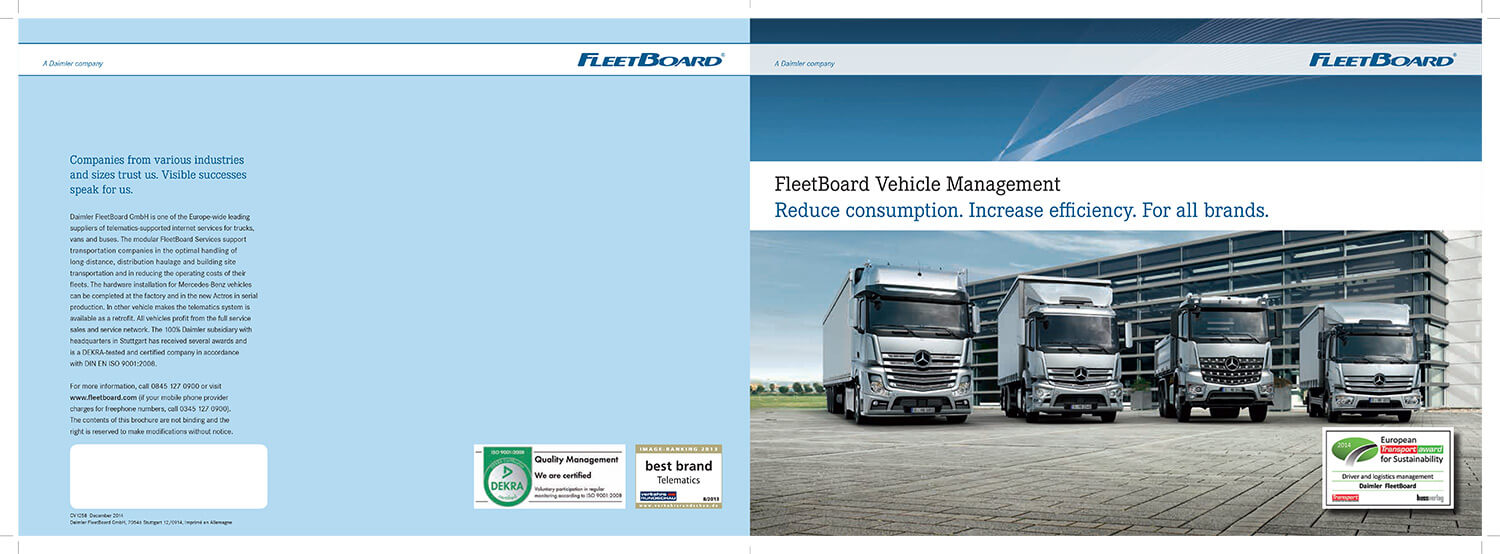
I’ve written commercial vehicle communications for Mercedes-Benz, including Fleetboard and truck range brochures.
That experience involves translating technical and operational information into something useful to the people making purchasing and fleet decisions.
The systems matter.
So does explaining why anybody should want them.
Good logistics writing starts with good questions
Your operational team probably knows far more about your business than any marketing brief can reasonably accommodate.
They understand the difficult routes, unusual loads, customer requirements, delivery pressures and the problems you’ve learned to anticipate.
My journalism background is particularly useful here. I’ll research the subject, examine the available information and talk to the people who understand the operation.
Then I’ll identify what matters to the audience, organise the information and turn it into clear, convincing copy.
I won’t pretend to have spent 30 years managing a freight depot.
I’ve spent them making complicated subjects understandable.
It’s a useful distinction.
Transport and logistics copywriting services
I write for freight forwarders, hauliers, couriers, warehousing providers, shipping businesses, supply chain specialists, logistics technology companies and commercial transport organisations. Projects can include:
- Transport and logistics website copy
- Freight forwarding, haulage and distribution copy
- Corporate brochures and capability statements
- Commercial vehicle and fleet communications
- Logistics advertising and marketing campaigns
- Case studies and customer success stories
- Supply chain articles and thought leadership
- Technical and product communications
- White papers and industry reports
- Annual reports and ESG content
- Customer communications and email campaigns
- Brand messaging and positioning
I can work directly with your business or alongside your marketing department, commercial team, technical specialists or agency.
Thirty years of delivering the right message
Thirty years in journalism, government speechwriting and commercial copywriting have taught me that understanding the subject is only half the job. The other half is understanding what the reader needs from it.
It’s also taught me that impressive-sounding language is no substitute for useful information.
Transport and logistics customers are often making decisions with significant operational and financial consequences.
They need to know what you can do, how you do it and why they should believe you.
I’ll help you explain those things without making every sentence sound as though it’s trying to win a logistics industry award.
Got something that needs explaining?
Perhaps you’re launching a service, rewriting your website, preparing a brochure or trying to explain a logistics operation that makes perfect sense to your team but rather less to everybody else.
Send me the brief, the existing material or simply tell me what you’re working on.
I’ll ask a few questions.
Then I’ll tell you whether I can help.
WHAT I WRITE ABOUT
There are no dull subjects. Only dull writers.
Lost for words?
info@tomrigby.com
+44 (0) 7715 171286